Tissues
Respiratory system
2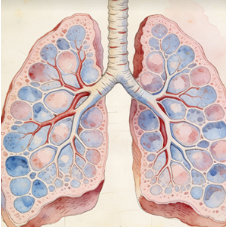
Lung
The lungs are paired, spongy, air-filled organs located in the thoracic cavity. Their primary function is gas exchange: oxygen from inhaled air diffuses into the blood in the alveoli, while carbon dioxide diffuses out to be exhaled. The branching airway tree (trachea to bronchi to bronchioles) conducts air. They also play roles in pH balance, speech, and host defense.
Trachea
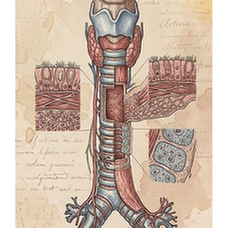
The trachea, or windpipe, is a cartilaginous tube connecting the larynx to the primary bronchi. Its C-shaped hyaline cartilage rings provide rigidity to keep the airway open, while the posterior membranous wall allows flexibility for swallowing. It is lined with ciliated pseudostratified columnar epithelium that traps and moves particles out of the airway. It is the main conduit for air to the lungs.
Digestive system
6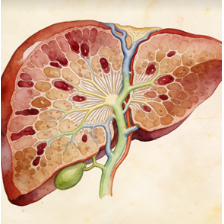
Liver
The liver is the largest internal organ and a metabolic powerhouse located in the upper right abdomen. It performs over 500 vital functions, including detoxification of metabolites, protein synthesis, production of biochemicals for digestion (bile), glycogen storage, regulation of blood glucose, synthesis of plasma proteins (e.g., albumin), and breakdown of old red blood cells. It has a remarkable capacity for regeneration.
Stomach
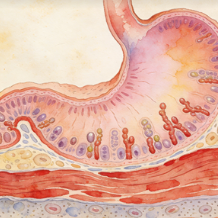
The stomach is a J-shaped muscular sac in the upper abdomen that serves as a temporary reservoir for food. It mechanically churns and chemically digests food via gastric acid (HCl) and enzymes like pepsin. Its lining secretes mucus to protect itself. It regulates the delivery of partially digested food (chyme) into the small intestine. It also produces intrinsic factor, essential for vitamin B12 absorption.
Pancreas
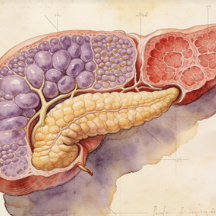
The pancreas is a dual-function gland located behind the stomach. Its exocrine portion (acinar cells) produces digestive enzymes (lipase, amylase, proteases) secreted into the duodenum. Its endocrine portion (islets of Langerhans) secretes hormones directly into the bloodstream, primarily insulin (from beta cells) and glucagon (from alpha cells), which are crucial for blood glucose regulation.
Esophagus
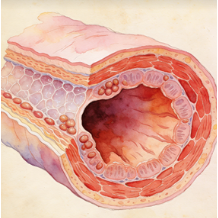
The esophagus is a muscular tube that connects the pharynx to the stomach, passing through the diaphragm. Its primary function is to transport food and liquids from the mouth to the stomach via coordinated, wave-like muscle contractions called peristalsis. The upper and lower esophageal sphincters regulate entry and prevent reflux. Its lining is stratified squamous epithelium for protection against abrasion.
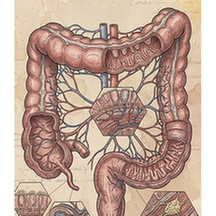
Intestine
The colon, or large intestine, is the final part of the digestive tract. Its main functions are to absorb water and electrolytes from indigestible food matter, compact the remaining material into feces, and store it until defecation. It houses a vast population of commensal bacteria (gut microbiota) that ferment certain substrates and produce vitamins (like K and some B vitamins). It consists of ascending, transverse, descending, and sigmoid sections.
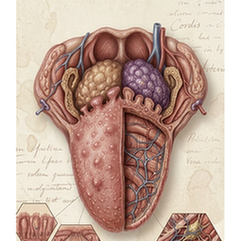
Tongue
The tongue is a muscular organ in the mouth covered with a mucous membrane. Its intrinsic and extrinsic muscles provide precise movement for speech, swallowing, and food manipulation. Its surface is covered with papillae, many of which contain taste buds for gustation (sweet, salty, sour, bitter, umami). It is also crucial for articulating speech sounds and for oral cleansing.
Reproductive system
3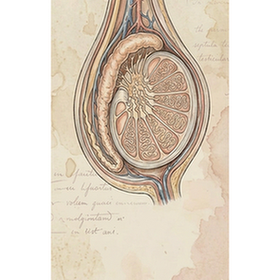
Testis
The testes (singular: testis) are the male primary gonads, housed in the scrotum. They have two primary functions: spermatogenesis, the production of spermatozoa in the seminiferous tubules; and steroidogenesis, the secretion of androgens, primarily testosterone, by Leydig cells. Temperature regulation in the scrotum is essential for normal spermatogenesis. Testosterone drives male secondary sexual characteristics and reproductive function.
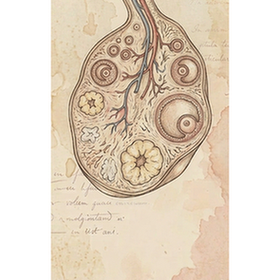
Ovary
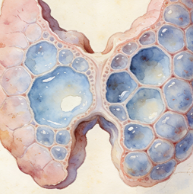
The ovaries are the female primary gonads, located in the pelvic cavity. They have two key functions: gametogenesis, the production and release of oocytes (eggs) through ovulation; and steroidogenesis, the secretion of the sex hormones estrogen and progesterone. These hormones regulate the menstrual cycle, support pregnancy, and maintain female secondary sexual characteristics. The ovaries contain a finite number of follicles at birth.
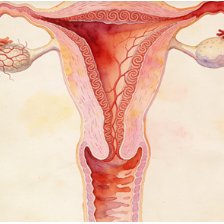
Uterus
The uterus (womb) is a hollow, muscular, pear-shaped organ located in the female pelvis. It is the site of menstruation, implantation of a fertilized egg, gestation of the fetus, and labor. Its inner lining, the endometrium, cyclically thickens and sheds in response to ovarian hormones. Its thick myometrial wall contracts powerfully during childbirth. The cervix is its lower part, opening into the vagina.
Urinary system
2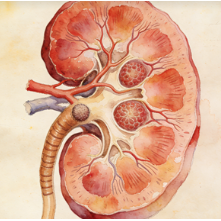
Kidney
The kidneys are paired, bean-shaped organs located retroperitoneally in the upper abdominal area. They are the body's primary filtration system, removing waste products and excess ions from blood to form urine. They critically regulate blood volume, pressure, pH, and electrolyte balance (e.g., sodium, potassium). They also produce hormones: erythropoietin (stimulates RBC production) and renin (regulates blood pressure).
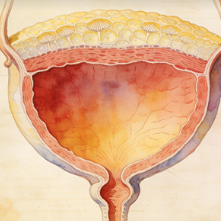
Bladder
The urinary bladder is a hollow, muscular, distensible organ located in the pelvis. Its primary function is to store urine produced by the kidneys before it is excreted from the body via micturition (urination). The detrusor muscle in its wall contracts to expel urine. Its capacity and the sensation of fullness are controlled by complex neural pathways. The internal and external urethral sphincters control release.