Tissues
Nervous system
2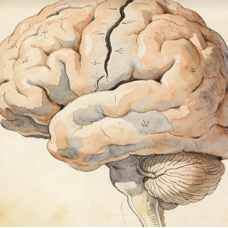
Brain
The whole brain refers to the entire encephalon, encompassing all major divisions: cerebrum (cerebral hemispheres), cerebellum, and brainstem (midbrain, pons, medulla). It is the central organ of the nervous system, responsible for integrating sensory information, generating thoughts and emotions, coordinating all voluntary and involuntary bodily functions, and enabling consciousness. It is protected by the skull and meninges.
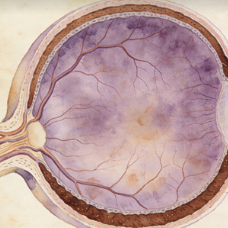
Eye
This complex refers to the functional unit of the posterior eye, comprising the neural retina and the underlying retinal pigment epithelium (RPE). The neural retina detects and processes light, while the RPE provides critical metabolic support, waste removal, and light absorption. Their intimate structural and functional relationship is essential for normal vision; diseases often involve both layers.
Immune system
2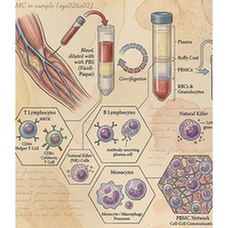
Blood
Peripheral Blood Mononuclear Cells (PBMCs) are a population of blood cells with a single, round nucleus, isolated from peripheral blood. This mixed cell population primarily includes lymphocytes (T cells, B cells, NK cells) and monocytes. They are a critical component of the immune system and are widely used in research and diagnostics for immunophenotyping, functional assays, and genetic studies.
Spleen
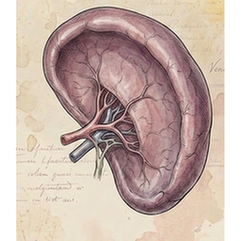
The spleen is the largest secondary lymphoid organ, located in the left upper abdomen. It filters blood, removing old or damaged red blood cells and platelets, and captures blood-borne pathogens. Its white pulp contains immune cells (lymphocytes, macrophages) that mount immune responses. The red pulp is responsible for RBC filtration and storage. It is a key site for antibody production and immune surveillance.
Respiratory system
1
Reproductive system
2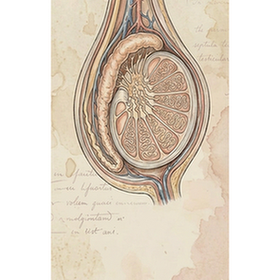
Testis
The testes (singular: testis) are the male primary gonads, housed in the scrotum. They have two primary functions: spermatogenesis, the production of spermatozoa in the seminiferous tubules; and steroidogenesis, the secretion of androgens, primarily testosterone, by Leydig cells. Temperature regulation in the scrotum is essential for normal spermatogenesis. Testosterone drives male secondary sexual characteristics and reproductive function.
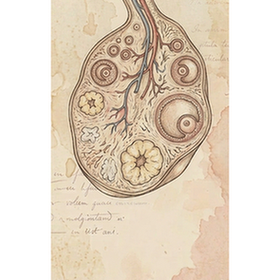
Ovary
The ovaries are the female primary gonads, located in the pelvic cavity. They have two key functions: gametogenesis, the production and release of oocytes (eggs) through ovulation; and steroidogenesis, the secretion of the sex hormones estrogen and progesterone. These hormones regulate the menstrual cycle, support pregnancy, and maintain female secondary sexual characteristics. The ovaries contain a finite number of follicles at birth.
Motor system
2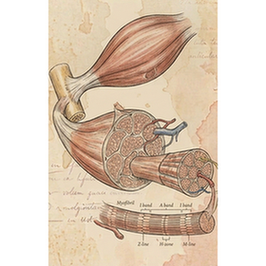
Muscle
Skeletal muscle is a type of striated muscle tissue attached to bones by tendons. It is under voluntary control via the somatic nervous system and is responsible for all locomotion, posture, and voluntary movements. Each muscle fiber is multinucleated and contains highly organized myofibrils with sarcomeres, the contractile units. It also functions as a major metabolic organ and an endocrine tissue, secreting myokines.