Tissues
Digestive system
5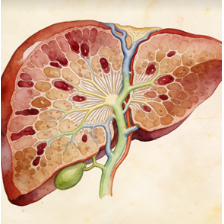
Liver
The liver is the largest internal organ and a metabolic powerhouse located in the upper right abdomen. It performs over 500 vital functions, including detoxification of metabolites, protein synthesis, production of biochemicals for digestion (bile), glycogen storage, regulation of blood glucose, synthesis of plasma proteins (e.g., albumin), and breakdown of old red blood cells. It has a remarkable capacity for regeneration.
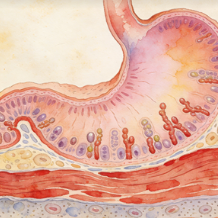
Stomach
The stomach is a J-shaped muscular sac in the upper abdomen that serves as a temporary reservoir for food. It mechanically churns and chemically digests food via gastric acid (HCl) and enzymes like pepsin. Its lining secretes mucus to protect itself. It regulates the delivery of partially digested food (chyme) into the small intestine. It also produces intrinsic factor, essential for vitamin B12 absorption.
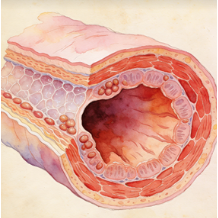
Esophagus
The esophagus is a muscular tube that connects the pharynx to the stomach, passing through the diaphragm. Its primary function is to transport food and liquids from the mouth to the stomach via coordinated, wave-like muscle contractions called peristalsis. The upper and lower esophageal sphincters regulate entry and prevent reflux. Its lining is stratified squamous epithelium for protection against abrasion.
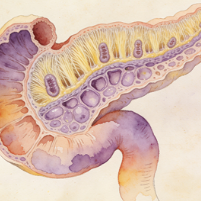
Intestine
The duodenum is the first and shortest segment (about 25 cm) of the small intestine, immediately following the stomach. It is a C-shaped structure where most chemical digestion occurs. It receives chyme from the stomach, bile from the liver/gallbladder, and digestive enzymes from the pancreas. Its Brunner's glands secrete alkaline mucus to neutralize gastric acid, protecting the intestinal lining and optimizing enzyme activity.
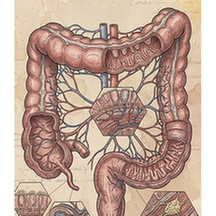
Intestine
The colon, or large intestine, is the final part of the digestive tract. Its main functions are to absorb water and electrolytes from indigestible food matter, compact the remaining material into feces, and store it until defecation. It houses a vast population of commensal bacteria (gut microbiota) that ferment certain substrates and produce vitamins (like K and some B vitamins). It consists of ascending, transverse, descending, and sigmoid sections.