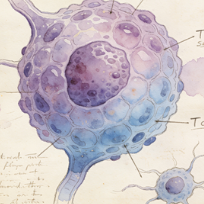
Cell Types
Immune cells
14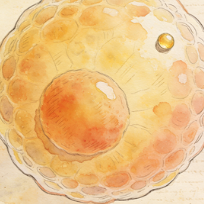
B cells
B cells are lymphocytes responsible for the humoral arm of the adaptive immune response. They develop in the bone marrow and, upon maturation, circulate in blood and lymph. When activated by antigen (often with T cell help), they proliferate and differentiate into antibody-secreting plasma cells or long-lived memory B cells. Their antibodies neutralize pathogens, opsonize them for phagocytosis, and activate the complement system.
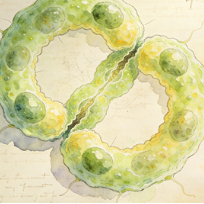
Cycling T cells
Cycling T cells are T lymphocytes undergoing active cell division. This is a hallmark of T cell activation following antigen recognition via the TCR and costimulation. Massive clonal expansion occurs, transforming a few naive antigen-specific T cells into thousands of effector T cells to combat infection. It is a fundamental step in mounting an effective adaptive immune response and generating long-lived memory T cells.
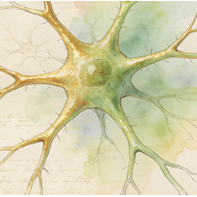
Dendritic cells
Dendritic cells (DCs) are professional antigen-presenting cells (APCs) that act as sentinels linking innate and adaptive immunity. Immature DCs in tissues capture antigens, then mature and migrate to lymph nodes. There, they present processed antigens on MHC molecules to naive T cells, providing the critical "signal 1" and costimulatory "signal 2" required for T cell activation and differentiation, thereby initiating antigen-specific immune responses.
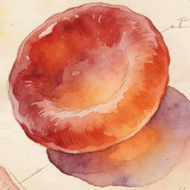
Erythroid cells
Erythroid cells represent the lineage of hematopoietic cells committed to becoming erythrocytes (red blood cells). This includes progenitors (BFU-E, CFU-E) and morphologically identifiable precursors: proerythroblasts, basophilic, polychromatophilic, and orthochromatic erythroblasts, which undergo hemoglobin synthesis, nuclear condensation, and finally enucleation to form reticulocytes and then mature RBCs. Their primary function is oxygen transport via hemoglobin.
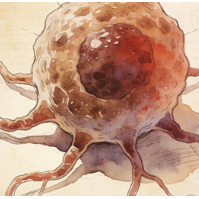
Macrophages
Macrophages are large, phagocytic cells of the innate immune system present in all tissues (where they have specific names like Kupffer cells, microglia). They derive from blood monocytes or local progenitors. They engulf and destroy pathogens and dead cells, secrete cytokines and chemokines to regulate inflammation, present antigens, and are key players in tissue repair, remodeling, and homeostasis. They exhibit remarkable functional plasticity (M1/M2 spectra).
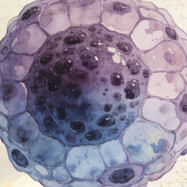
Mast cells
Mast cells are tissue-resident granulocytes found near blood vessels and nerves, particularly in skin, lungs, and gut mucosa. They store pre-formed inflammatory mediators (histamine, tryptase, heparin) in their granules. They are central effectors in IgE-mediated allergic reactions (anaphylaxis, hay fever) and defense against parasites. Upon activation, they rapidly degranulate and also synthesize cytokines/chemokines, influencing inflammation, immunity, and even tissue remodeling.
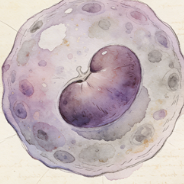
Monocytes
Monocytes are circulating white blood cells (agranulocytes) that serve as precursors for macrophages and dendritic cells. Produced in the bone marrow, they patrol the bloodstream for several days before migrating into tissues in response to inflammatory signals. In tissues, they differentiate into macrophages or dendritic cells. In blood, they can phagocytose pathogens and present antigens, acting as a bridge between innate and adaptive immunity.
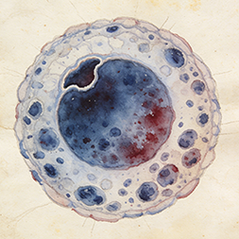
Myelocytes
Myelocytes in naked mole rat (SP239). 4316 cells across 1 tissues.
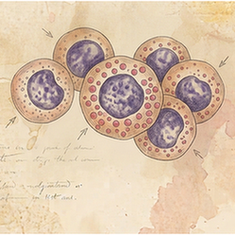
Natural killer cells
Natural Killer (NK) cells are cytotoxic lymphocytes of the innate immune system. They provide rapid responses to virus-infected cells and tumor cells without prior sensitization. They use a balance of activating and inhibitory receptors to detect "missing self" (loss of MHC I) or "induced self" (stress ligands). They kill targets by releasing perforin and granzymes (cytotoxic granules) and through death receptor ligands like FasL.
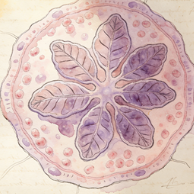
Neutrophils
Neutrophils are the most abundant white blood cell and the first responders to sites of bacterial or fungal infection. They are highly motile phagocytic cells that engulf and destroy pathogens using antimicrobial granules (containing myeloperoxidase, defensins) and reactive oxygen species. They form neutrophil extracellular traps (NETs) to ensnare microbes. Their short lifespan and potent effector functions make them crucial for acute inflammation.
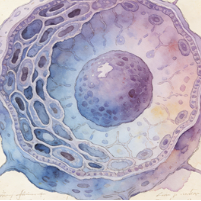
Plasma B cells
Plasma B cells (or plasma cells) are the terminal, fully differentiated effector state of activated B lymphocytes. They are antibody factories, specializing in the massive secretion of antibodies of a single specificity. They possess extensive endoplasmic reticulum and a prominent Golgi apparatus to support high-rate protein synthesis. Most are short-lived, but some become long-lived plasma cells that reside in the bone marrow, providing sustained antibody levels.
Promyelocytes
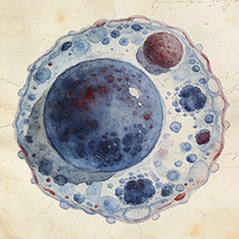
Promyelocytes in naked mole rat (SP239). 1812 cells across 1 tissues.
T cells
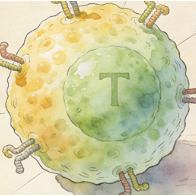
T cells (T lymphocytes) are central players in cell-mediated adaptive immunity. They develop in the thymus and express T cell receptors (TCRs) that recognize peptide antigens presented by MHC molecules. Major subsets include: Helper T cells (CD4+, which secrete cytokines to help B cells and macrophages), Cytotoxic T cells (CD8+, which kill infected/cancerous cells), and Regulatory T cells (Tregs, which suppress immune responses to prevent autoimmunity).
Thymocytes
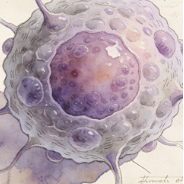
Thymocytes are developing T cell precursors within the thymus. They originate from bone marrow-derived progenitors that migrate to the thymus. Here, they undergo a rigorous process of maturation involving proliferation, TCR gene rearrangement, and positive/negative selection. Only those with a functional TCR that recognizes self-MHC with moderate affinity (positive selection) but not self-antigens too strongly (negative selection) survive to become mature, naive T cells.