Tissues
Immune system
5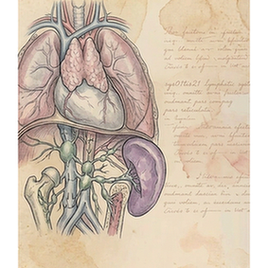
Thymus
The thymus is a primary lymphoid organ located in the upper anterior mediastinum, behind the sternum. It is most active during childhood and adolescence, where it is the site of T lymphocyte (T cell) maturation and selection. Thymic epithelial cells present self-antigens to developing T cells, eliminating self-reactive ones (negative selection) and promoting the survival of useful ones (positive selection). It undergoes involution with age.
Bone marrow
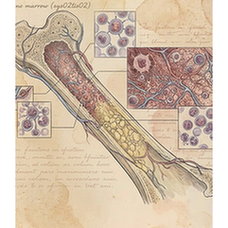
Bone marrow is the soft, spongy tissue found within the cavities of bones, primarily in the pelvis, sternum, vertebrae, and ribs. It is the primary site of hematopoiesis—the production of all blood cellular components, including red blood cells (erythrocytes), white blood cells (leukocytes), and platelets. It contains hematopoietic stem cells and a supportive stromal microenvironment.
Blood
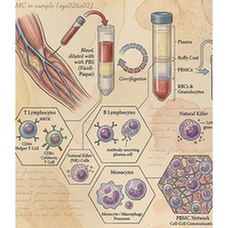
Peripheral Blood Mononuclear Cells (PBMCs) are a population of blood cells with a single, round nucleus, isolated from peripheral blood. This mixed cell population primarily includes lymphocytes (T cells, B cells, NK cells) and monocytes. They are a critical component of the immune system and are widely used in research and diagnostics for immunophenotyping, functional assays, and genetic studies.
Spleen
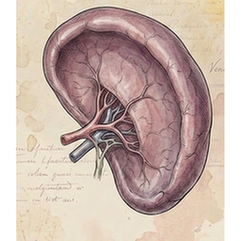
The spleen is the largest secondary lymphoid organ, located in the left upper abdomen. It filters blood, removing old or damaged red blood cells and platelets, and captures blood-borne pathogens. Its white pulp contains immune cells (lymphocytes, macrophages) that mount immune responses. The red pulp is responsible for RBC filtration and storage. It is a key site for antibody production and immune surveillance.
Lymph node
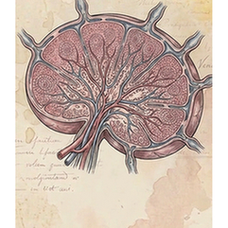
Lymph nodes are small, bean-shaped secondary lymphoid organs distributed along lymphatic vessels throughout the body. They act as filters for lymph fluid, trapping foreign particles and pathogens. They are highly organized structures containing B-cell follicles and T-cell zones, where antigens are presented to lymphocytes, activating adaptive immune responses. Swollen lymph nodes often indicate an active immune response to infection.
Digestive system
5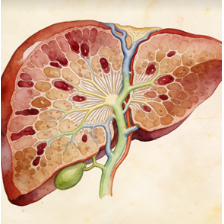
Liver
The liver is the largest internal organ and a metabolic powerhouse located in the upper right abdomen. It performs over 500 vital functions, including detoxification of metabolites, protein synthesis, production of biochemicals for digestion (bile), glycogen storage, regulation of blood glucose, synthesis of plasma proteins (e.g., albumin), and breakdown of old red blood cells. It has a remarkable capacity for regeneration.
Stomach
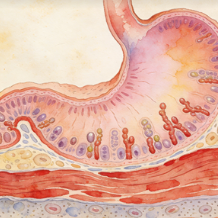
The stomach is a J-shaped muscular sac in the upper abdomen that serves as a temporary reservoir for food. It mechanically churns and chemically digests food via gastric acid (HCl) and enzymes like pepsin. Its lining secretes mucus to protect itself. It regulates the delivery of partially digested food (chyme) into the small intestine. It also produces intrinsic factor, essential for vitamin B12 absorption.
Pancreas
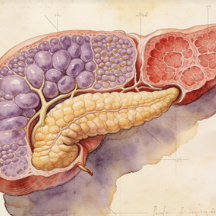
The pancreas is a dual-function gland located behind the stomach. Its exocrine portion (acinar cells) produces digestive enzymes (lipase, amylase, proteases) secreted into the duodenum. Its endocrine portion (islets of Langerhans) secretes hormones directly into the bloodstream, primarily insulin (from beta cells) and glucagon (from alpha cells), which are crucial for blood glucose regulation.
Intestine
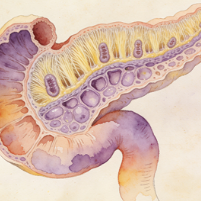
The duodenum is the first and shortest segment (about 25 cm) of the small intestine, immediately following the stomach. It is a C-shaped structure where most chemical digestion occurs. It receives chyme from the stomach, bile from the liver/gallbladder, and digestive enzymes from the pancreas. Its Brunner's glands secrete alkaline mucus to neutralize gastric acid, protecting the intestinal lining and optimizing enzyme activity.
Intestine
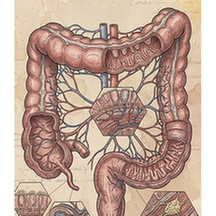
The colon, or large intestine, is the final part of the digestive tract. Its main functions are to absorb water and electrolytes from indigestible food matter, compact the remaining material into feces, and store it until defecation. It houses a vast population of commensal bacteria (gut microbiota) that ferment certain substrates and produce vitamins (like K and some B vitamins). It consists of ascending, transverse, descending, and sigmoid sections.
Reproductive system
2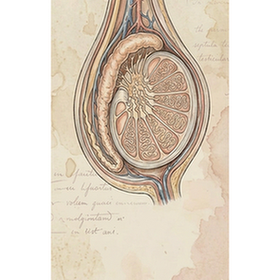
Testis
The testes (singular: testis) are the male primary gonads, housed in the scrotum. They have two primary functions: spermatogenesis, the production of spermatozoa in the seminiferous tubules; and steroidogenesis, the secretion of androgens, primarily testosterone, by Leydig cells. Temperature regulation in the scrotum is essential for normal spermatogenesis. Testosterone drives male secondary sexual characteristics and reproductive function.
Epididymis
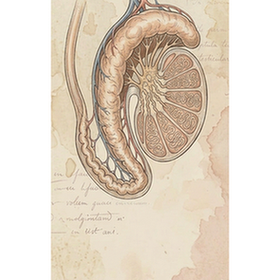
The epididymis is a tightly coiled, comma-shaped tube that sits on the posterior surface of each testis. It is the site of sperm maturation and storage. Immature sperm from the testes enter the head, gain motility and fertilizing capacity as they pass through the body, and are stored in the tail until ejaculation. Its secretions provide an environment for sperm to complete their functional development.
Urinary system
2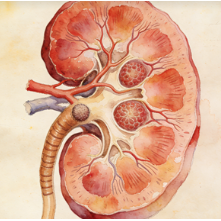
Kidney
The kidneys are paired, bean-shaped organs located retroperitoneally in the upper abdominal area. They are the body's primary filtration system, removing waste products and excess ions from blood to form urine. They critically regulate blood volume, pressure, pH, and electrolyte balance (e.g., sodium, potassium). They also produce hormones: erythropoietin (stimulates RBC production) and renin (regulates blood pressure).
Bladder
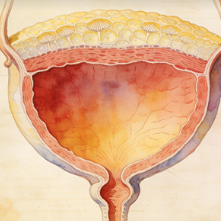
The urinary bladder is a hollow, muscular, distensible organ located in the pelvis. Its primary function is to store urine produced by the kidneys before it is excreted from the body via micturition (urination). The detrusor muscle in its wall contracts to expel urine. Its capacity and the sensation of fullness are controlled by complex neural pathways. The internal and external urethral sphincters control release.