Cell Types
Neural cells
6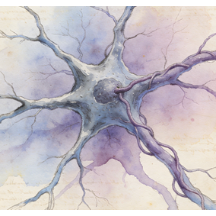
Astrocytes
Astrocytes are star-shaped glial cells, the most abundant in the central nervous system (CNS). They are vital for homeostasis: they form part of the blood-brain barrier, regulate blood flow, control extracellular ion/neurotransmitter balance (e.g., glutamate uptake), and provide metabolic support to neurons. Through the "tripartite synapse," they modulate synaptic strength and plasticity. They also respond to injury via reactive astrogliosis, playing dual roles in scar formation and neuroprotection.
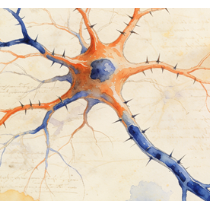
Excitatory neurons
Excitatory neurons are nerve cells that, when activated, increase the likelihood of their target neuron firing an action potential. They primarily release the neurotransmitter glutamate at their synapses. They form the primary driving force in neural circuits throughout the brain (e.g., cortical pyramidal neurons) and are fundamental for information propagation, synaptic plasticity (like LTP), and processes such as learning, memory, and cognition.
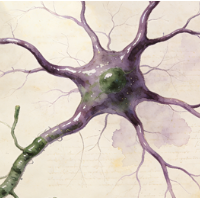
Inhibitory neurons
Inhibitory neurons reduce the probability of their postsynaptic target neuron firing an action potential. They primarily release the neurotransmitters GABA (in the brain) or glycine (in the spinal cord/brainstem). They are crucial for balancing neural circuit activity, preventing runaway excitation, generating rhythmic outputs (e.g., in pacemaker circuits), and shaping the temporal and spatial precision of neural computations. Types include interneurons like basket cells and Purkinje cells.
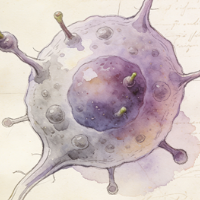
Oligodendrocyte progenitor cells
Oligodendrocyte progenitor cells (OPCs), also called NG2-glia, are a population of glial cells found throughout the CNS. They are proliferative and maintain the capacity to differentiate into mature, myelinating oligodendrocytes. OPCs are critical for developmental myelination and remain in the adult CNS, where they contribute to remyelination after demyelinating injuries (e.g., in Multiple Sclerosis) and may have additional roles in monitoring neural circuits.
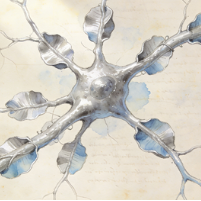
Oligodendrocytes
Oligodendrocytes are the myelinating glial cells of the central nervous system (CNS). Each oligodendrocyte extends multiple processes to wrap and insulate segments of several different axons with concentric layers of myelin membrane. This myelin sheath greatly increases the speed of action potential propagation (saltatory conduction). They also provide metabolic support to the axons they enwrap. Loss of oligodendrocytes or myelin disrupts nerve signaling.
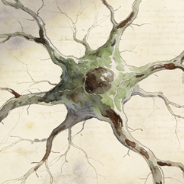
Microglia
Microglia are the resident macrophages and primary immune cells of the central nervous system (CNS). In their resting state, they constantly survey the parenchyma. Upon detecting injury, infection, or pathological signals, they activate, becoming phagocytic to clear debris, dead cells, and pathogens. They also play essential roles in synaptic pruning during development, modulating neuroinflammation, and can contribute to both repair and neurodegeneration in diseases.
Epithelial cells
2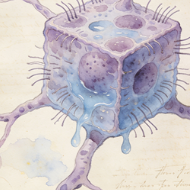
Choroid plexus
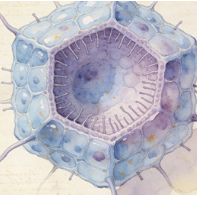
The choroid plexus is a specialized structure in the brain's ventricles composed of a network of capillaries surrounded by a monolayer of modified epithelial cells (choroid plexus epithelial cells). Its primary function is to produce cerebrospinal fluid (CSF) by filtering blood plasma and actively secreting ions and water. It also forms the blood-CSF barrier and secretes growth factors and signaling molecules into the CSF.
Ependymal cells
Ependymal cells are ciliated epithelial-like glial cells that line the ventricles of the brain and the central canal of the spinal cord. Their coordinated ciliary beating helps circulate cerebrospinal fluid (CSF). They contribute to the blood-CSF barrier, secrete factors into the CSF, and in certain niches (like the lateral ventricles), some can act as neural stem cells (radial glia-like cells).
Stromal cells
2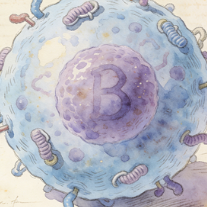
Fibroblasts
Fibroblasts are the most common cells of connective tissue. They synthesize and secrete the extracellular matrix (ECM) components, including collagen, elastin, and fibronectin, providing structural and biochemical support to surrounding cells. They are key players in wound healing, where they proliferate, migrate to the injury site, and differentiate into contractile myofibroblasts to close wounds. They also communicate with immune and epithelial cells.
Pericytes
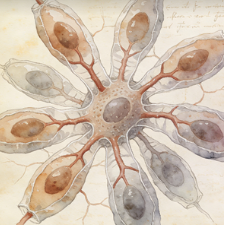
Pericytes are contractile mesenchymal cells that wrap around the endothelial cells of capillaries and venules. They are embedded in the basement membrane and are crucial for vascular stability, regulating blood flow, promoting endothelial survival, and participating in the formation and maintenance of the blood-brain barrier. They also have stem cell properties and can differentiate into other mesenchymal cells during tissue repair.