Cell Types
Neural cells
3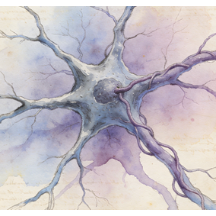
Astrocytes
Astrocytes are star-shaped glial cells, the most abundant in the central nervous system (CNS). They are vital for homeostasis: they form part of the blood-brain barrier, regulate blood flow, control extracellular ion/neurotransmitter balance (e.g., glutamate uptake), and provide metabolic support to neurons. Through the "tripartite synapse," they modulate synaptic strength and plasticity. They also respond to injury via reactive astrogliosis, playing dual roles in scar formation and neuroprotection.
Excitatory neurons
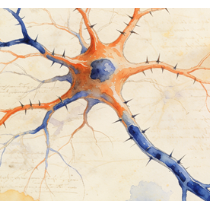
Excitatory neurons are nerve cells that, when activated, increase the likelihood of their target neuron firing an action potential. They primarily release the neurotransmitter glutamate at their synapses. They form the primary driving force in neural circuits throughout the brain (e.g., cortical pyramidal neurons) and are fundamental for information propagation, synaptic plasticity (like LTP), and processes such as learning, memory, and cognition.
Inhibitory neurons
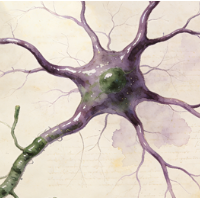
Inhibitory neurons reduce the probability of their postsynaptic target neuron firing an action potential. They primarily release the neurotransmitters GABA (in the brain) or glycine (in the spinal cord/brainstem). They are crucial for balancing neural circuit activity, preventing runaway excitation, generating rhythmic outputs (e.g., in pacemaker circuits), and shaping the temporal and spatial precision of neural computations. Types include interneurons like basket cells and Purkinje cells.
Epithelial cells
2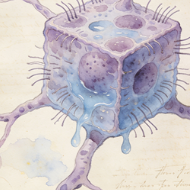
Choroid plexus
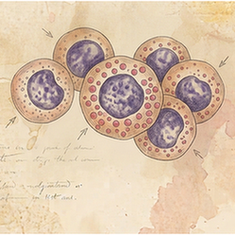
The choroid plexus is a specialized structure in the brain's ventricles composed of a network of capillaries surrounded by a monolayer of modified epithelial cells (choroid plexus epithelial cells). Its primary function is to produce cerebrospinal fluid (CSF) by filtering blood plasma and actively secreting ions and water. It also forms the blood-CSF barrier and secretes growth factors and signaling molecules into the CSF.
Hepatocytes
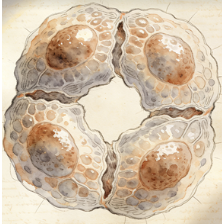
Hepatocytes are the principal parenchymal cells of the liver, making up about 80% of its mass. They are metabolic powerhouses with functions including: protein synthesis (albumin, clotting factors), bile production, detoxification and metabolism of drugs/toxins, glycogen storage and glucose homeostasis, lipid metabolism, and cholesterol synthesis. They are arranged in plates radiating from central veins, with polarized faces facing sinusoids and bile canaliculi.