 🐾
Species
🐾
Species
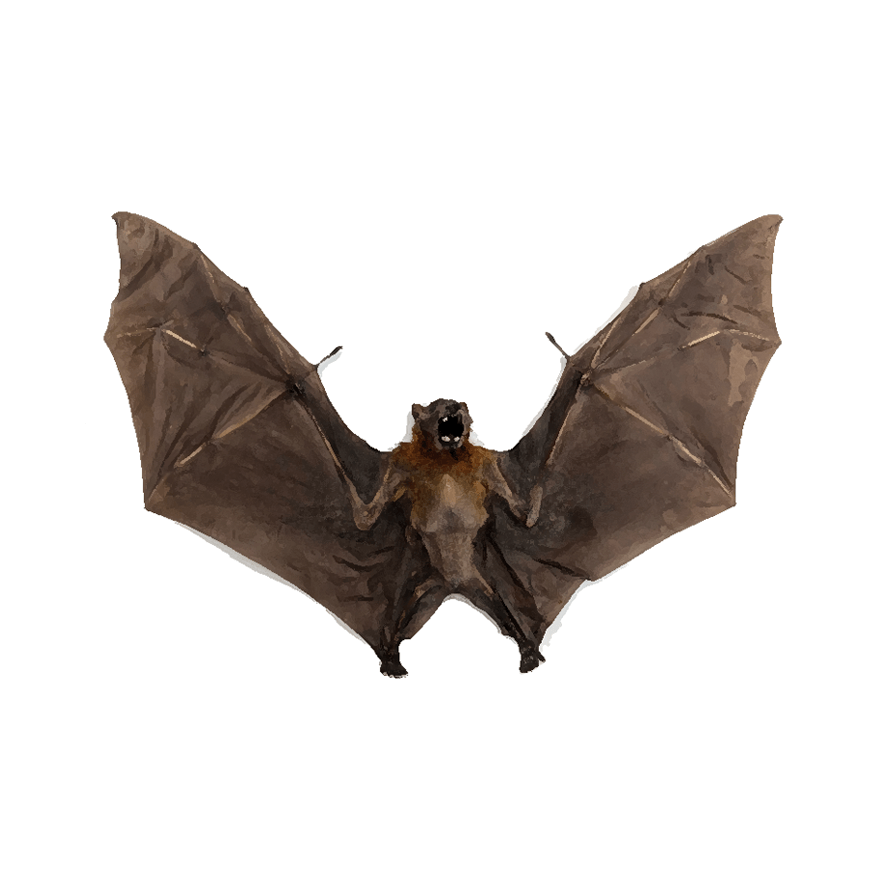
Greater short-nosed fruit bat
Cynopterus sphinx
Bats
Species Overview
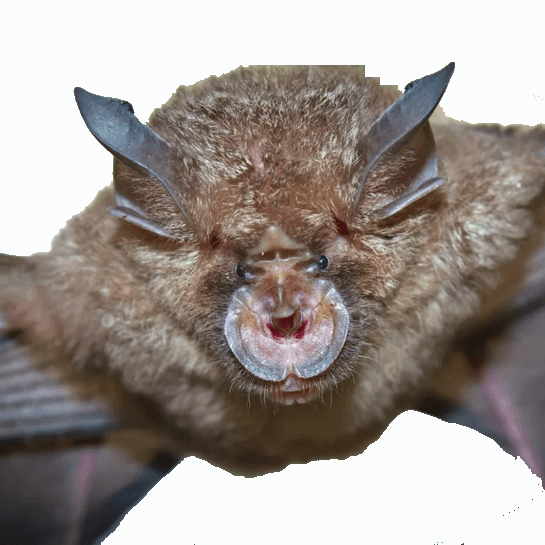
A small fruit bat (family Pteropodidae) widely distributed across South and Southeast Asia. Adults weigh 40–70 g with a wingspan of ~25–30 cm. They have a short, broad muzzle, brown-gray fur, and distinctive orange or yellow margins on the ears and nostrils, especially pronounced in males. They are among the few bat species known to construct "tents" by systematically biting and folding large leaves or palm fronds to create roosting shelters—a behavior thought to attract females. They roost in small groups of 2–20 individuals. Diet consists of fruits (particularly figs, guavas, and bananas), nectar, and pollen, making them important seed dispersers and pollinators in tropical ecosystems. They are nocturnal, using vision and olfaction (not echolocation) for navigation. Females produce two litters per year, each of one pup, with gestation lasting ~3.5–4 months. They are studied in the context of bat-borne zoonotic viruses (Nipah, coronaviruses) and for their unique roosting ecology. They can be minor pests in fruit orchards. Lifespan: ~15 years. IUCN: Least Concern.
Integrated UMAP Atlas & Gene Explorer
Loading longevity analysis…
Loading UMAP for Greater short-nosed fruit bat…
Cell Distribution — WebGL
Cells: 0Types: 0Zoom: 1.0x
→ UMAP_1
↑ UMAP_2
Loading...
Cell Types
Loading cell types...
—
Tissues
—
Systems
—
Samples
0
Total Cells
0
Cell Types
View by System
Biological System Atlas1Systems

View by Tissue
Tissue-Level Cell Distribution1Tissues

View by Cell Type
Cellular Composition Explorer8Cell Types







📄 Overview
Related Species in Bats
Cell Type
Expression
Coords