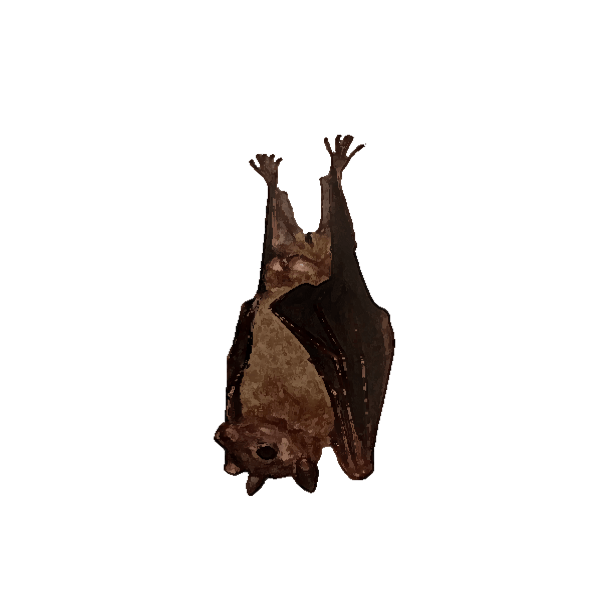
 🐾
Species
🐾
Species
Leschenault's rousette
Rousettus leschenaultii
Bats
Species Overview
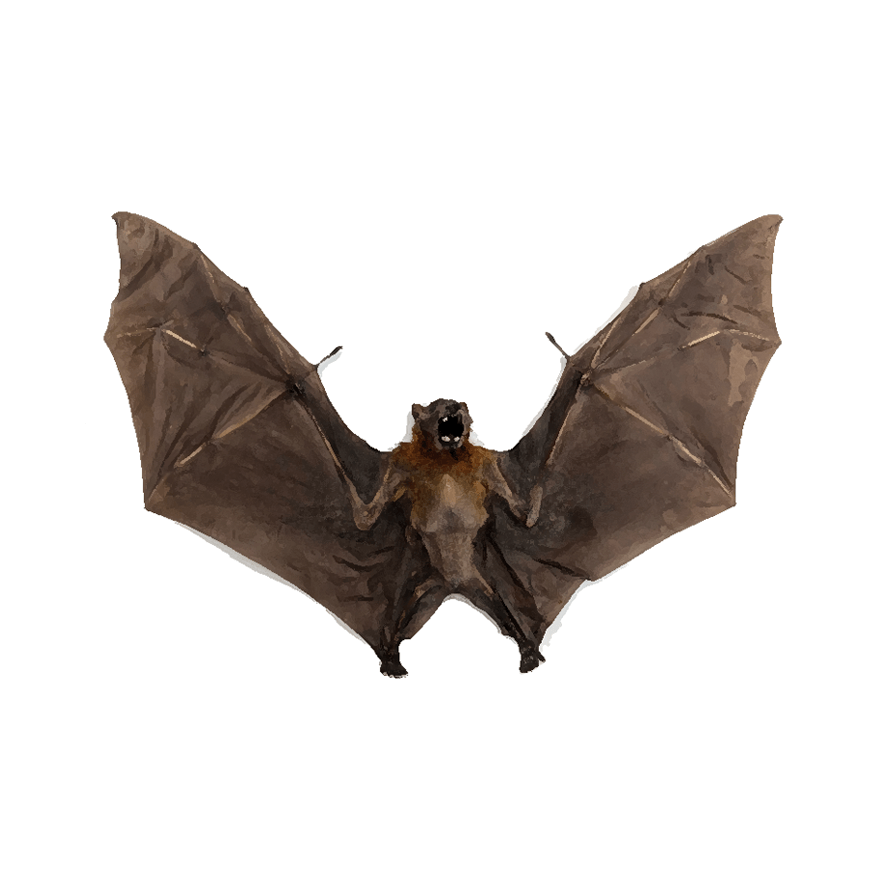
A medium-sized fruit bat (family Pteropodidae) ranging from Pakistan and India through Southeast Asia to southern China. Adults weigh 60–120 g with a wingspan of 40–50 cm. Fur is grayish-brown to tawny. They are notable among Old World fruit bats for possessing a primitive form of echolocation—they produce clicks with the tongue rather than the larynx—supplementing their vision and olfaction for navigating dark cave roosts. They roost in large colonies (thousands to tens of thousands) in caves, abandoned buildings, and temples. They are nocturnal frugivores and nectarivores, feeding on figs, bananas, guavas, mangoes, and nectar, playing important roles as pollinators and seed dispersers in tropical ecosystems. They can fly 20+ km per night to forage. They have been identified as natural reservoir hosts for Nipah-like viruses, coronaviruses, and other potentially zoonotic pathogens. Females give birth to one pup per litter, with 1–2 breeding cycles per year. Gestation is ~115–125 days. Lifespan: up to 20+ years. IUCN: Least Concern.
Integrated UMAP Atlas & Gene Explorer
Loading longevity analysis…
Loading UMAP for Leschenault's rousette…
Cell Distribution — WebGL
Cells: 0Types: 0Zoom: 1.0x
→ UMAP_1
↑ UMAP_2
Loading...
Cell Types
Loading cell types...
—
Tissues
—
Systems
—
Samples
0
Total Cells
0
Cell Types
View by System
Biological System Atlas1Systems

View by Tissue
Tissue-Level Cell Distribution1Tissues

View by Cell Type
Cellular Composition Explorer10Cell Types







View Datasets
Species-Related Single-Cell Datasets1Datasets
📄 Overview
Related Species in Bats
Cell Type
Expression
Coords