 🐾
Species
🐾
Species
Species Overview
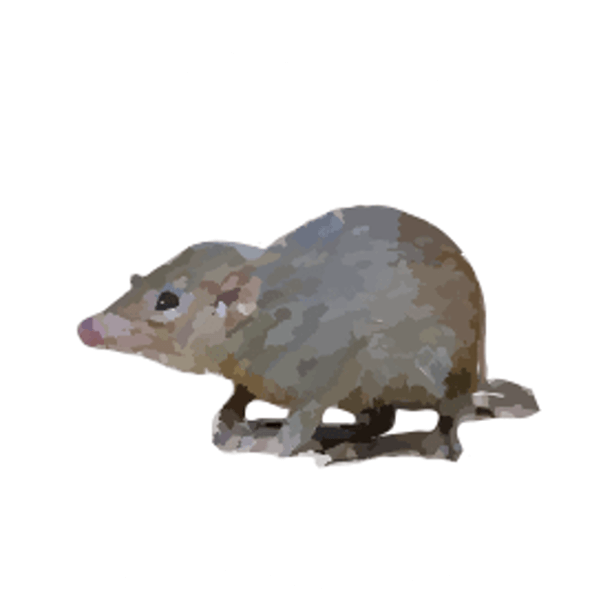
A small mammal of the order Scandentia (family Tupaiidae), native to mainland Southeast Asia and southern China. Adults weigh 100–200 g with a body length of ~18 cm plus a bushy tail of similar length. They resemble squirrels, with a pointed snout, small rounded ears, and rufous-brown fur. Despite their superficial squirrel-like appearance, treeshrews are considered close relatives of primates and are placed in their own order. They are diurnal and semi-arboreal, foraging on the ground and in low vegetation for insects, fruits, and seeds. Notably, they possess the highest brain-to-body mass ratio of any mammal. They are solitary and territorial. Females give birth to 1–3 poorly developed young after ~43 days of gestation. They are increasingly used as laboratory models, particularly for hepatitis B and C (one of few non-primate mammals susceptible to HBV), myopia, depression, and stress-related disorders. Some populations also voluntarily consume fermented palm nectar (alcohol). Lifespan: 2–5 years wild, up to 12 captive.
Integrated UMAP Atlas & Gene Explorer
Loading longevity analysis…
Loading UMAP for Northern tree shrew…
Cell Distribution — WebGL
Cells: 0Types: 0Zoom: 1.0x
→ UMAP_1
↑ UMAP_2
Loading...
Cell Types
Loading cell types...
—
Tissues
—
Systems
—
Samples
0
Total Cells
0
Cell Types
View by System
Biological System Atlas1Systems
View by Tissue
Tissue-Level Cell Distribution1Tissues

View by Cell Type
Cellular Composition Explorer7Cell Types




📄 Overview
Related Species in Other mammals
Cell Type
Expression
Coords