 🐾
Species
🐾
Species
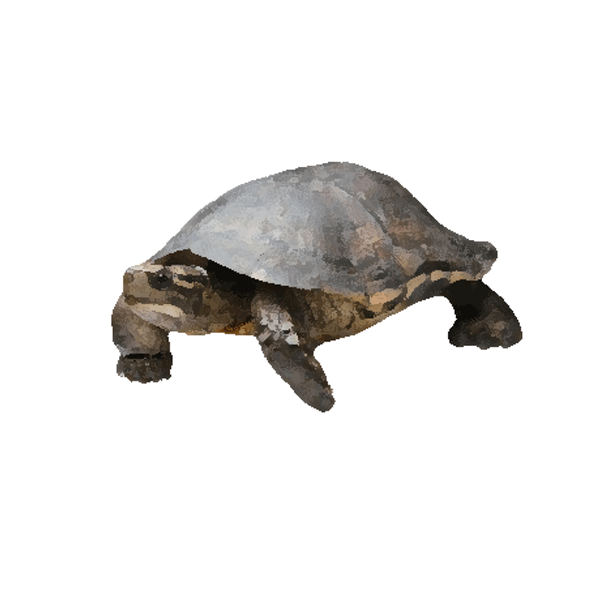
Chinese pond turtle
Mauremys reevesii
Reptiles
Species Overview
A small freshwater turtle (family Geoemydidae) native to China, Korea, Japan. Adults are compact, reaching 10–17 cm in carapace length. The carapace is brown to dark brown with three longitudinal keels (ridges) that become less prominent with age. The head has fine yellow or cream lines on the sides, and the eyes are prominent. The plastron is dark brown to black with lighter margins. They inhabit ponds, marshes, canals, and slow streams. Omnivorous, eating aquatic insects, worms, snails, fish, and vegetation. They are commonly kept as pets in East Asia and are culturally significant in China and Japan—considered symbols of longevity. They have been widely used in traditional Chinese medicine. Females lay 4–9 eggs per clutch; incubation: ~60–80 days. Wild populations have been severely depleted by collection for food, medicine, and the pet trade. Hybridization with released non-native Mauremys species (e.g., M. sinensis) threatens genetic integrity. Classified as Endangered by the IUCN. Lifespan: 20–25+ years.
Integrated UMAP Atlas & Gene Explorer
Loading longevity analysis…
Loading UMAP for Chinese pond turtle…
Cell Distribution — WebGL
Cells: 0Types: 0Zoom: 1.0x
→ UMAP_1
↑ UMAP_2
Loading...
Cell Types
Loading cell types...
—
Tissues
—
Systems
—
Samples
0
Total Cells
0
Cell Types
View by System
Biological System Atlas1Systems
View by Tissue
Tissue-Level Cell Distribution1Tissues
View by Cell Type
Cellular Composition Explorer10Cell Types
View Datasets
Species-Related Single-Cell Datasets3Datasets
| DataID ↕ | Latin Name ↕ | Folder ID ↕ | Tissue ↕ | Title ↕ | Detail | QC | Analysis |
|---|---|---|---|---|---|---|---|
| Data1217 | Mauremys reevesii | Mauremys_reevesii_ThisStudy_2024_Rank0001 | Brain | BrainScope | QC | Analysis | |
| Data1218 | Mauremys reevesii | Mauremys_reevesii_ThisStudy_2024_Rank0002 | Brain | BrainScope | QC | Analysis | |
| Data1368 | Mauremys reevesii | BS0001143;BS0001144 | Brain | BrainScope | QC | Analysis |
📄 Overview
Related Species in Reptiles
Cell Type
Expression
Coords